Wine, Translated into Light

The Sensory Gap
in Wine.

The wine industry has a communication problem. Tasting notes speak to experts. Everyone else orders by price. Sensory Visualization makes what sommeliers feel visible to the rest of us.

Scroll
The Problem

Why wine loses
its own story.

"Dark cherry, wet stone, cedar, a finish of dried tobacco." These words are the product of years of trained perception. For the person reading them on a wine list, they might as well be in another language.

The language gap

Wine tasting notes are written by experts for experts. They encode a complex sensory reality — flavor, aroma, texture, structure, finish — into compressed metaphors that require a shared vocabulary to decode. The sommelier who writes "graphite minerality with a long tannic spine" is describing something precise. The guest reading it has no frame of reference.

This isn't a failure of the guest. It's a failure of the medium. Language is the wrong output format for sensory experience — at least for anyone who hasn't spent years calibrating the same internal dictionary.

The opportunity

When guests can't make sense of a wine list, they fall back on two things: price and whatever the server suggests. A Gastro Obscura poll found that 53% of diners have ordered wine simply by choosing the second-cheapest option — not because they didn't care, but because the list gave them nothing else to work with. The desire is there. The bridge is missing.

Millennials have now surpassed Boomers as the largest wine-drinking generation — and they discover through screens, not shelf tags. Direct-to-consumer channels are shrinking, but average bottle prices are rising: people are willing to pay more when they connect with what they're buying. The Wine Market Council's research is clear — intimidation and language people can't connect with are the barriers, not lack of interest. That's not an industry in decline. That's an industry waiting for a new way to communicate.

73%
of consumers find wine lists
intimidating — not uninteresting
E&J Gallo / Dark Horse study, 2,000+ respondents
The Drinks Business, 2018
58%
want to order wine but feel
they lack the knowledge
E&J Gallo / Dark Horse study
Same survey, 2,000+ respondents
47%
drinking less cite price, not
disinterest — the desire is intact
Wine Opinions survey
SevenFifty Daily, 2026
31%
of wine drinkers are now Millennials
— a generation that discovers visually
Wine Market Council 2025 Benchmark Survey
Nearly 5,000 respondents; Boomers at 26%
9M
consumers lost since 2023 — not to
dislike, but to a communication gap
Wine Market Council 2025 Benchmark Survey
Down from 85M to 76M adult consumers
15%
direct-to-consumer volume decline — yet
average bottle price rose 11% same year
Sovos ShipCompliant / WineBusiness Analytics
2025: fewer buyers, but higher value per sale
The Approach

From tasting note
to cinematic scene.

Sensory Visualization takes what's hidden inside expert tasting notes and turns it into a 10-second cinematic video — the same information, delivered in a format you understand the moment you see it.
Traditional tasting note
"A complex Burgundy with notes of dried cherry, forest floor, leather, and a long tannic finish with hints of tobacco and cedar."
"Bright acidity with jasmine, green apple, and a crisp minerality on the finish."
"Ripe blackberry, dark chocolate, vanilla bean, with a velvety mid-palate and smoky oak integration."
Sensory Visualization output
Deep garnet wine swirling in glass — dark cherry and dried violet bloom from the rim as liquid crests, forest floor and leather textures rising through cedar smoke. Bottle and estate branding settle in the final frame.
Pale gold wine turning in glass — jasmine and green apple spill upward from the rim in cool mineral light, crisp acidity rendered as refracted brightness across slate. Bottle and label emerge on a clean finish.
Inky purple wine swirling slow — blackberry and dark chocolate erupt from the glass edge, vanilla warmth threading through velvet mouthfeel, smoky oak curling at the margins. Bottle and brand close the frame.
What a Sensory Visualization looks like
Each video follows the same cinematic arc — from glass to brand in ten seconds.
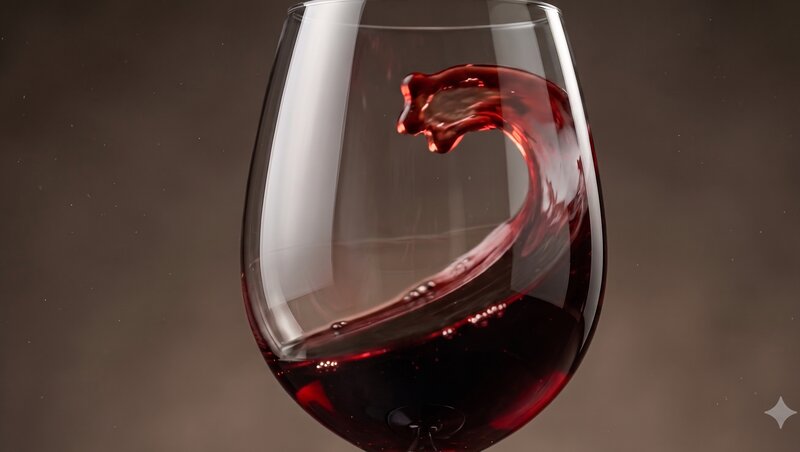
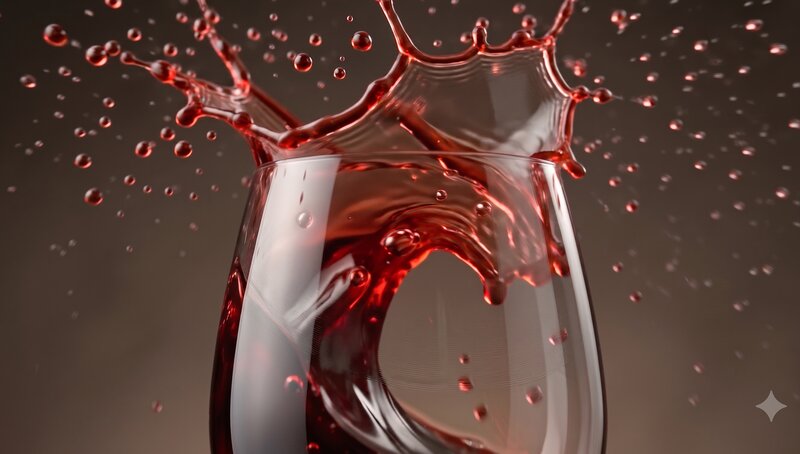
Red wine swirling inside a glass
THE SWIRL
Wine erupting from the glass rim
THE ERUPTION
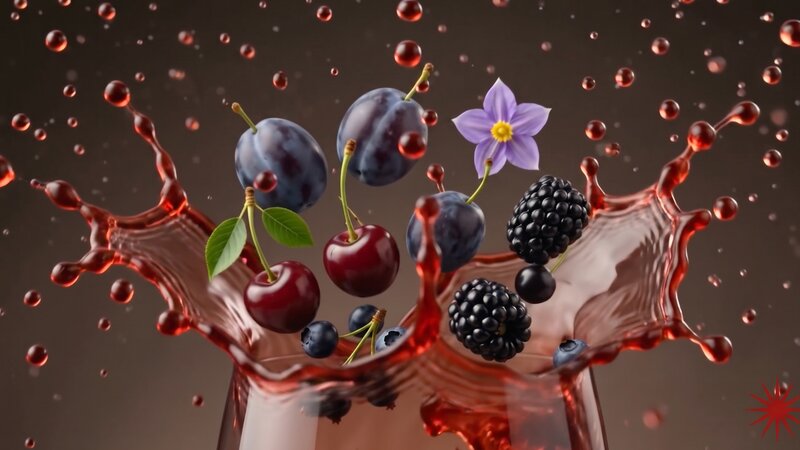
Flavor elements — cherries, plums, blackberries, lavender — bursting from the wine
THE FLAVORS
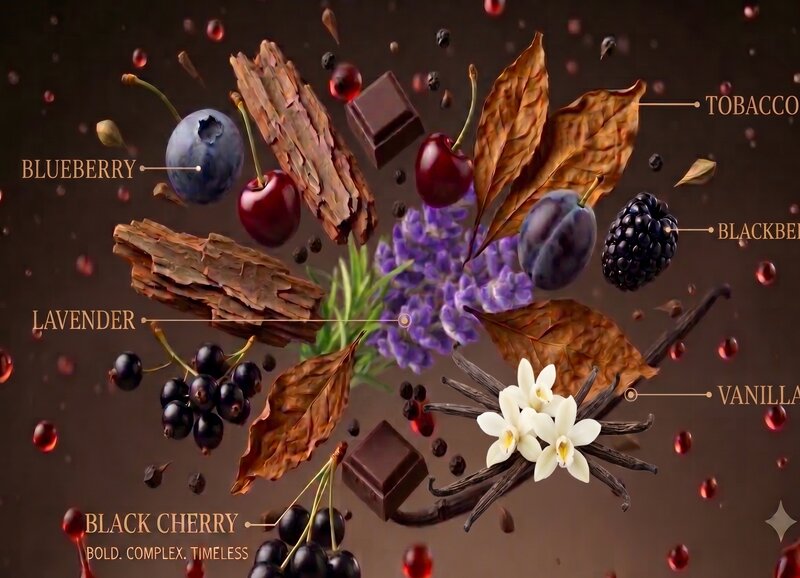
Each flavor labeled — tobacco, blackberry, lavender, vanilla, black cherry, blueberry
THE SENSORY MAP
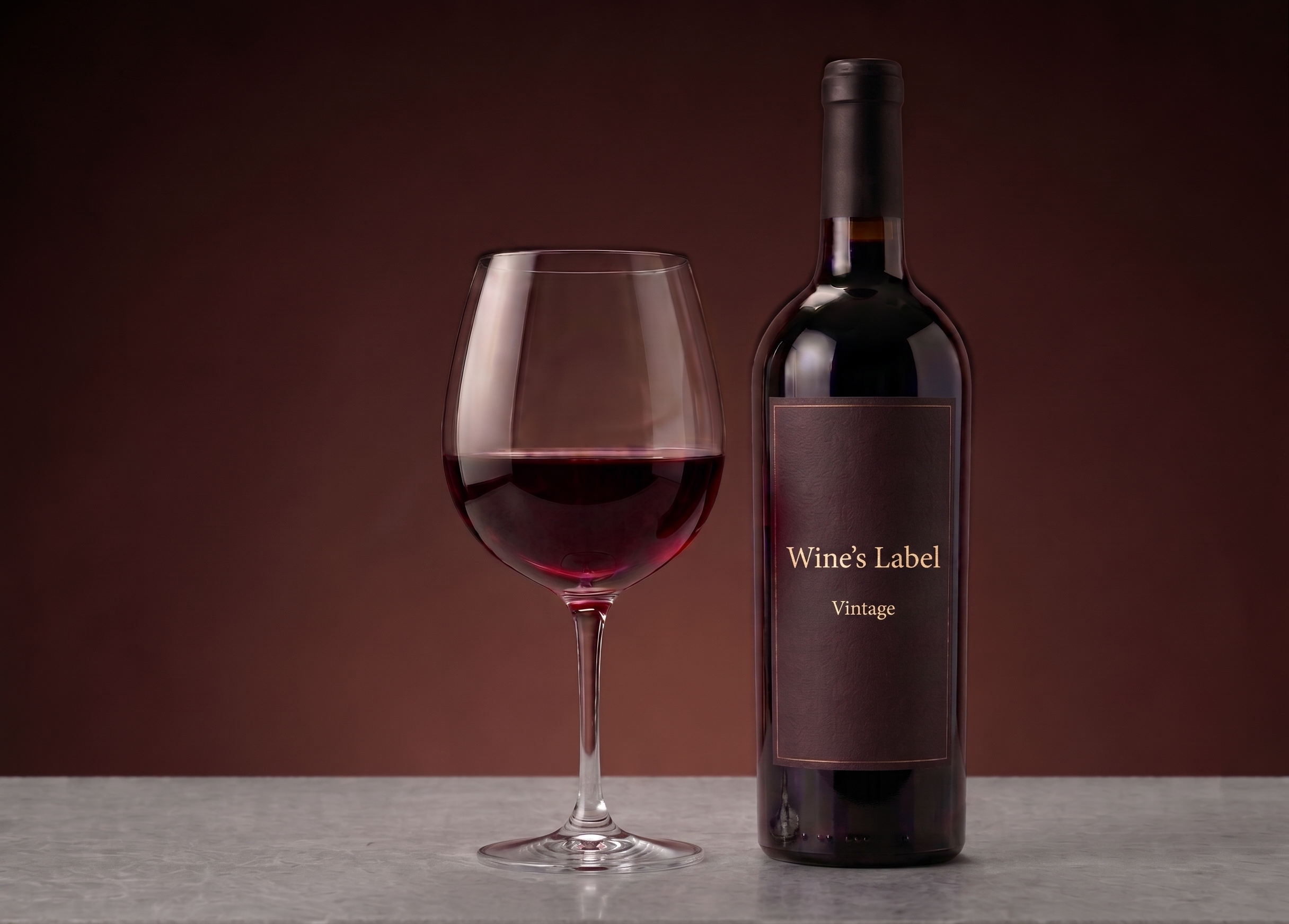
Wine glass beside bottle — Your Label, Your Vintage
YOUR BRAND
The last frame is always yours.
0s 3s 6s 10s

Why video, not text

The human brain processes visual information in 13 milliseconds. Tasting notes require active decoding — vocabulary recall, metaphor interpretation, sensory imagination. Video bypasses that entirely. A 10-second video lets you see the flavors — no tasting note required.

This isn't a replacement for the sommelier — it's a new instrument in their hands. The knowledge has always been there. Sensory Visualization gives them a way to share what they perceive with every guest at every table, in a format that lands before the first word of explanation.

The five-layer system

Every video follows the same cinematic structure: a wine glass, the specific wine swirling inside it, an eruption of flavor and aroma elements spilling from the rim as the liquid crests — then the bottle and brand composited into the closing frame. Within that structure, five layers map directly to the sensory profile: terroir and mood (light, atmosphere, season), base animation (the swirl's rhythm and speed), color overlay (varietal-specific palette in the glass), texture and mouthfeel (visual weight as the wine moves), and flavor and aroma (the eruption — each descriptor rendered as a distinct visual element).

Every layer is driven by the tasting note. Nothing is decorative. The glass is the stage. The wine is the actor. The flavors are what the audience sees.

The Pipeline

From language
to light.

Five stages from raw tasting note to deployable cinematic asset. Built on a codebook of 122 flavor-to-visual mappings covering every major red and white wine family.

01
Research

Professional tasting notes gathered and cross-referenced across expert sources to build a complete sensory profile of the wine.

02
Extract

Sensory descriptors mapped into visual parameters using the codebook — color, texture, motion, spatial atmosphere.

03
Compose

Five-layer compositing system builds the cinematic scene from mapped parameters. Each layer corresponds to a sensory dimension.

04
Generate

Mapped parameters feed into a proprietary layered template system — terroir, motion, color, texture, and flavor overlays composited into a 10-second cinematic clip unique to the wine.

05
Deliver

Brand integration, hosting, and delivery. Ready for table tablets, tasting room screens, product pages, and email campaigns.

Markets

Built for wine.
Every channel.

Sensory Visualization is built for the wine industry — sold to the businesses that move wine, experienced by the consumers who drink it. Every channel where a guest makes a decision is a channel where visualization changes the outcome.

Distributors

Sales velocity is what matters. When a restaurant can show a 10-second video at the table instead of handing over a text-heavy wine list, guests trade up. Visualization becomes a tool your reps bring to every account meeting — proof the wine sells itself when people can see it.

Wineries

Online product pages are text-heavy and sensory-empty. A cinematic video on the bottle page gives shoppers the atmospheric context they'd get in a tasting room. Pair it with wine club emails, tasting notes, and screens in the tasting room itself.

Restaurants

The wines-by-the-glass program is where the margin lives — and where guests are most uncertain. A tablet at the table playing 10-second clips for each option gives the guest a feel for the wine without requiring a sommelier at every table. The wine sells the wine.

Retailers

A wall of bottles and a shelf tag with a Parker score. That's what most shoppers get. QR-triggered video at the shelf or in-store screens playing sensory clips give customers the context a sommelier would — without needing one on the floor. The bottle tells its own story.

Open Questions

Things we're
still asking.

We're building this in the open. These are the questions shaping the work right now — not answers, not a pitch. Just the edges of the map we're drawing.

One bottle or a whole portfolio?

A single visualization for a signature wine tells a different story than a library of fifty. We're exploring what both look like — and whether the right starting point is one bottle that matters most, or a full catalog that needs to move.

Where does the video live?

A tablet at the table. A screen in the tasting room. A product page. A QR code on a shelf tag. Each placement changes what the video needs to do. We're thinking about this as much as the video itself.

What happens to a tasting note when you can see it?

Sommeliers spend years building an internal sensory language. What changes when that language becomes visible — for the guest, for the buyer, for the winemaker watching their own wine translated into something new?

Does visualization change what people order?

We believe it does. We don't have the data yet. That's the next step — and the conversation we want to have with people who sell wine every day.

Whose brand is it?

Every video ends with a bottle and a label. The sensory story is the wine's. The final frame is the winery's. We're designing a system where the brand arrives naturally — not bolted on, not an afterthought.

What else can you visualize?

Wine is where we're starting. But the underlying system — translating sensory language into cinematic video — doesn't stop at the glass. We're curious about what's next. We suspect you might be too.

Vision
"The most intimate senses — taste, smell, texture — are the least represented in visual media. We're building the infrastructure to change that."
— Randy Bain, Co-Founder

Wine is where we're starting — because the language is rich, the gap is wide, and the need is real. But the system underneath isn't limited to wine. The same approach works anywhere sensory experience is sold through words most people can't decode — spirits, coffee, fragrance, and beyond.

Currently in Development

Let's talk
wine.

Sensory Visualization is being built by The Angin Group. If you work in
wine distribution, winery operations, retail, or restaurant hospitality — we'd like to hear from you.